The best 7-day Morocco itinerary for a first visit is a one-way loop: Casablanca → Rabat → Meknes and Volubilis → Fes → the Sahara at Merzouga → the Dades Valley → Aït Ben Haddou → Marrakech. In one week you see three imperial cities, the Roman ruins of Volubilis, a night in the dunes and the kasbahs of the south, without driving the same road twice. Below is the route day by day, as our guides run it, with realistic drive times, entrance fees, and two alternatives: a Marrakech-based week and a “north route” for travellers who would rather skip the long desert drives.
Quick facts: one week in Morocco
- Best route for first-timers: Casablanca to Marrakech via Fes and the Sahara (about 1,400 km of driving over 7 days).
- Fly into Casablanca (CMN) and out of Marrakech (RAK), or the reverse. Open-jaw flights save a full day.
- Longest drive: Fes to Merzouga, about 470 km (7–8 hours with stops).
- Best months: March–May and September–November. In winter, expect cold desert nights and occasional snow on the Tizi n’Tichka pass.
- Key fees: Hassan II Mosque guided tour 140 MAD; Bahia Palace and Ben Youssef Madrasa about 100 MAD each.
- Getting around: trains are excellent between Casablanca, Rabat, Fes and Marrakech; for the desert and the south you need a private driver or a tour.
The 7-day Morocco itinerary at a glance
| Day | Route | Driving | Overnight |
|---|---|---|---|
| 1 | Casablanca (Hassan II Mosque) → Rabat | ~90 km, 1–1.5 h | Rabat |
| 2 | Rabat → Meknes → Volubilis → Fes | ~250 km, 4 h | Fes |
| 3 | Fes medina with a local guide | None | Fes |
| 4 | Fes → Ifrane → Midelt → Ziz Valley → Merzouga, camel trek | ~470 km, 7–8 h | Desert camp, Erg Chebbi |
| 5 | Sunrise → Rissani → Todgha Gorge → Dades Valley | ~250 km, 5 h | Dades Valley |
| 6 | Skoura → Ouarzazate → Aït Ben Haddou → Tizi n’Tichka → Marrakech | ~330 km, 6–7 h | Marrakech |
| 7 | Marrakech medina, palaces and Jemaa el-Fna | None | Marrakech (fly out day 8) |
This is the line our Highlights of Morocco tour follows. The version above adds a night in the Dades Valley, so the drive from the desert to Marrakech is split in two instead of done in one very long day.

Day 1: Casablanca and Rabat
Most long-haul flights land at Casablanca’s Mohammed V airport, so that is where the week starts. Casablanca is a working city rather than a sightseeing one, and the one thing you should not miss is the Hassan II Mosque: built partly over the Atlantic, with one of the tallest minarets in the world, it is one of the few mosques in Morocco open to non-Muslims. Visits are by guided tour only (140 MAD for foreign adults, several tours a day, with fewer on Fridays and during Ramadan). Check the day’s tour times when you land.
After lunch, drive about 90 km up the coast to Rabat, the capital and a UNESCO World Heritage city. In an afternoon you can cover the Hassan Tower and the Mausoleum of Mohammed V, then walk through the blue-and-white lanes of the Kasbah of the Udayas to the viewpoint over the Bou Regreg river. Rabat is calm, clean and easy-going, a gentle first night before the intensity of Fes.

Local tip: if your flight lands after midday, skip Casablanca’s centre and go straight to the mosque and on to Rabat. You lose nothing important.
Day 2: Meknes, Volubilis and on to Fes
Leave Rabat after breakfast for Meknes (about 140 km), the imperial city of Sultan Moulay Ismail. A short stop covers the monumental Bab Mansour gate, the Place el-Hedim and the old royal granaries.
Thirty kilometres north lies Volubilis, the best-preserved Roman site in Morocco and a UNESCO World Heritage Site. Walk the main street to the triumphal arch and look for the floor mosaics still in place in the merchants’ houses. Allow 1.5–2 hours; there is little shade, so bring water and a hat. The holy town of Moulay Idriss, on the hillside opposite, makes a good photo stop.

From Volubilis it is about 80 km to Fes. Arrive in time to settle into a riad inside the medina: staying in the old city, not a new-town hotel, is what makes Fes memorable.
Day 3: A full day in the Fes medina
Fes el-Bali is the largest car-free urban area in the world and a UNESCO site since 1981. It is also the easiest place in Morocco to get lost, so this is the one day we strongly recommend a licensed local guide. A good guide day usually includes:
- Bab Boujloud, the “Blue Gate”, and the main lanes of Tala’a Kebira.
- Al-Qarawiyyin, founded in 859 and often cited as the world’s oldest continuously operating university. Non-Muslims can look in from the doorways.
- A restored madrasa such as Bou Inania or Al-Attarine, with carved cedar and zellige tilework.
- The Chouara tannery, seen from the leather shops’ terraces. You’ll be handed a sprig of mint for the smell.
- Artisans’ quarters: coppersmiths on Place Seffarine, weavers, and the blue-and-white pottery Fes is known for.

In the late afternoon, drive up to the Merenid Tombs or the Borj Nord for the view over the whole medina at sunset, one of the great sights of Morocco.
Day 4: Fes to the Sahara at Merzouga
This is the longest day of the trip, about 470 km, but it is also one of the most varied. You climb into the Middle Atlas through Ifrane, a tidy alpine-style town nicknamed “the Switzerland of Morocco”, and the cedar forests around Azrou, where Barbary macaques often wait by the road. Lunch is usually in Midelt, between two mountain ranges. In the afternoon the road drops through the Ziz Valley, a long green ribbon of palm groves below red cliffs, and the landscape turns to desert.
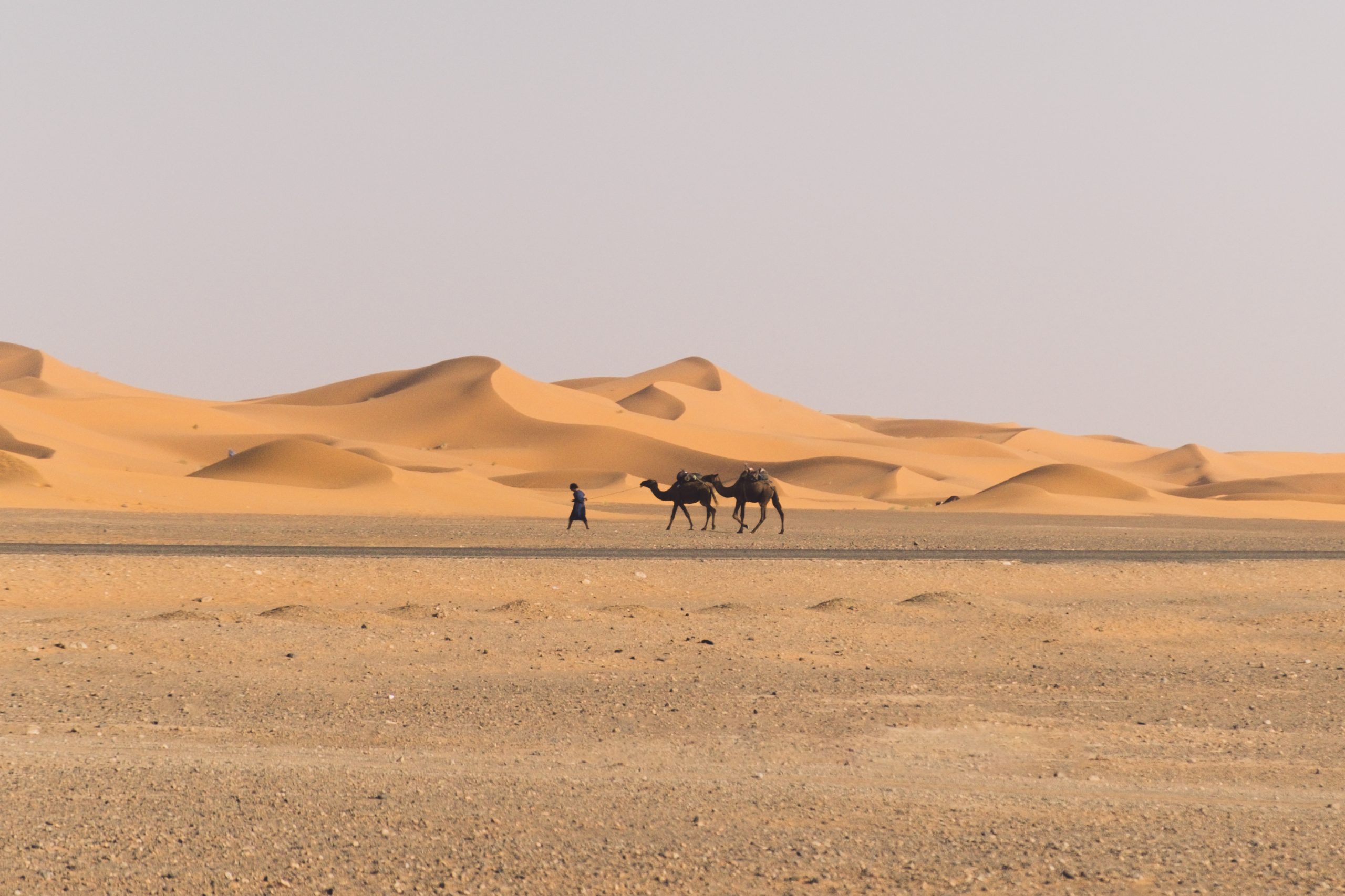
You reach Merzouga in time to swap the car for a camel and ride into the Erg Chebbi dunes for sunset. The camp is your home for the night: dinner, drums around the fire and, on clear nights, more stars than you have ever seen.

Why Merzouga and not Zagora? With only one desert night, you want the tall dunes. We explain the difference in detail in our guide Merzouga vs Zagora.
Day 5: Sunrise, Todgha Gorge and the Dades Valley
Wake early for sunrise from the top of a dune, then ride back to Merzouga for breakfast and a shower. Head west via Rissani, the old caravan town, and the oasis road to Tinghir.
Stop at the Todgha Gorge, where the canyon walls close in to a narrow passage with a stream running through it. It is a lovely place to stretch your legs after the desert.

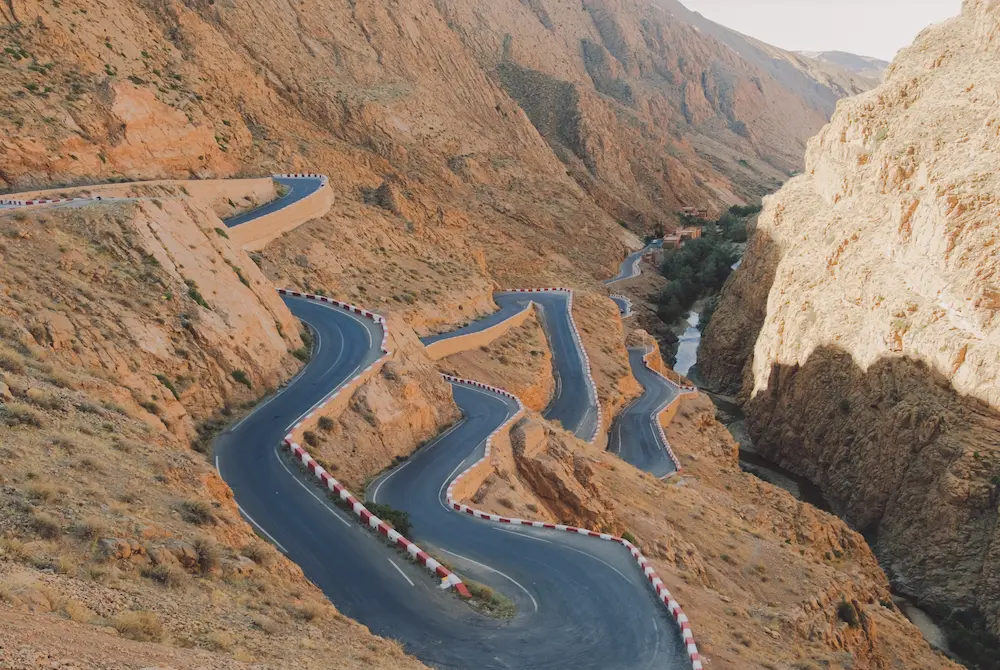
Continue to the Dades Valley and stay in a guesthouse with a view of the gorge. If you arrive early, drive up to the famous switchback road for the classic photo.
Day 6: Kasbahs, Aït Ben Haddou and the High Atlas to Marrakech
Follow the “Road of a Thousand Kasbahs” through the rose valley and the palm groves of Skoura to Ouarzazate.
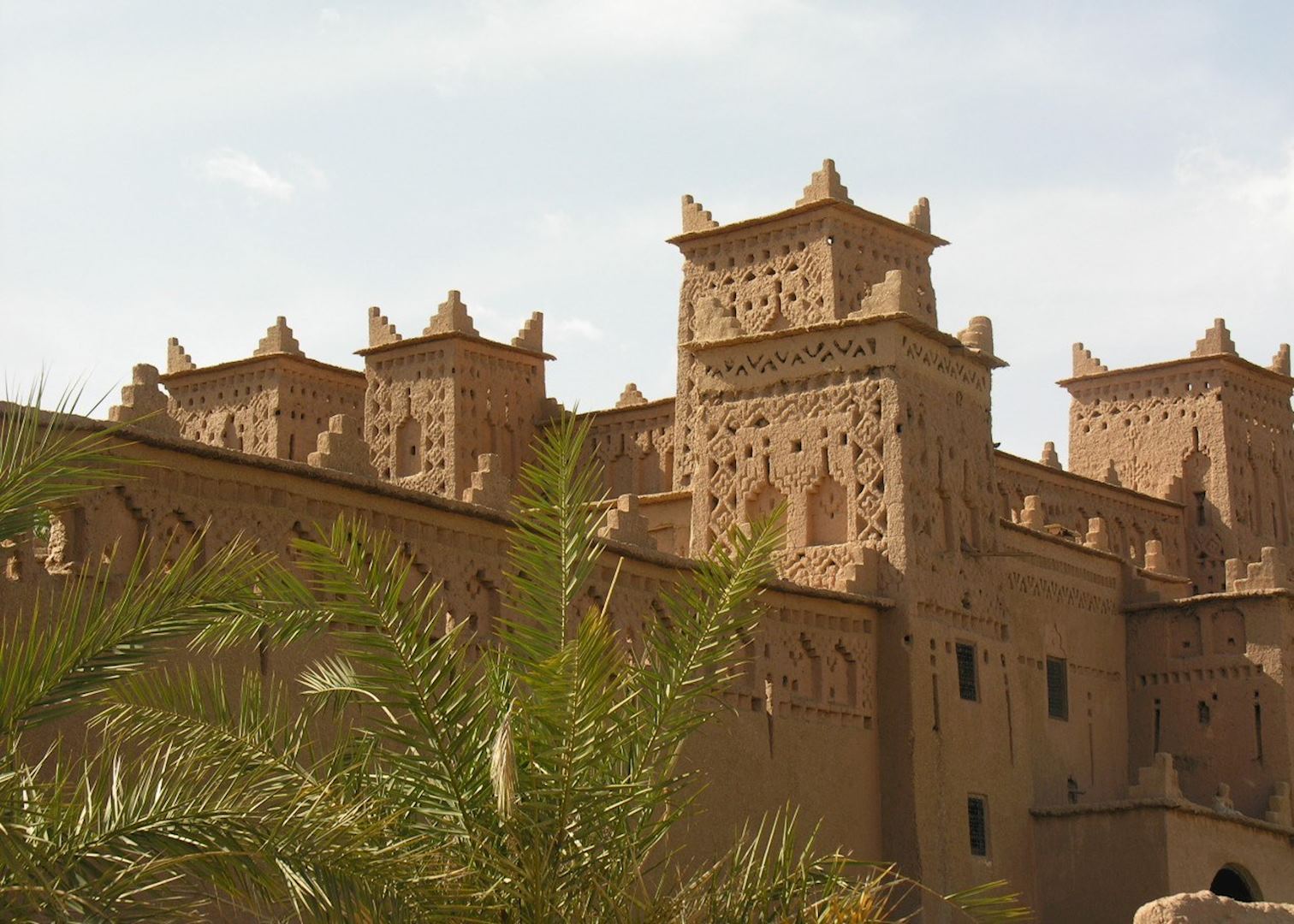
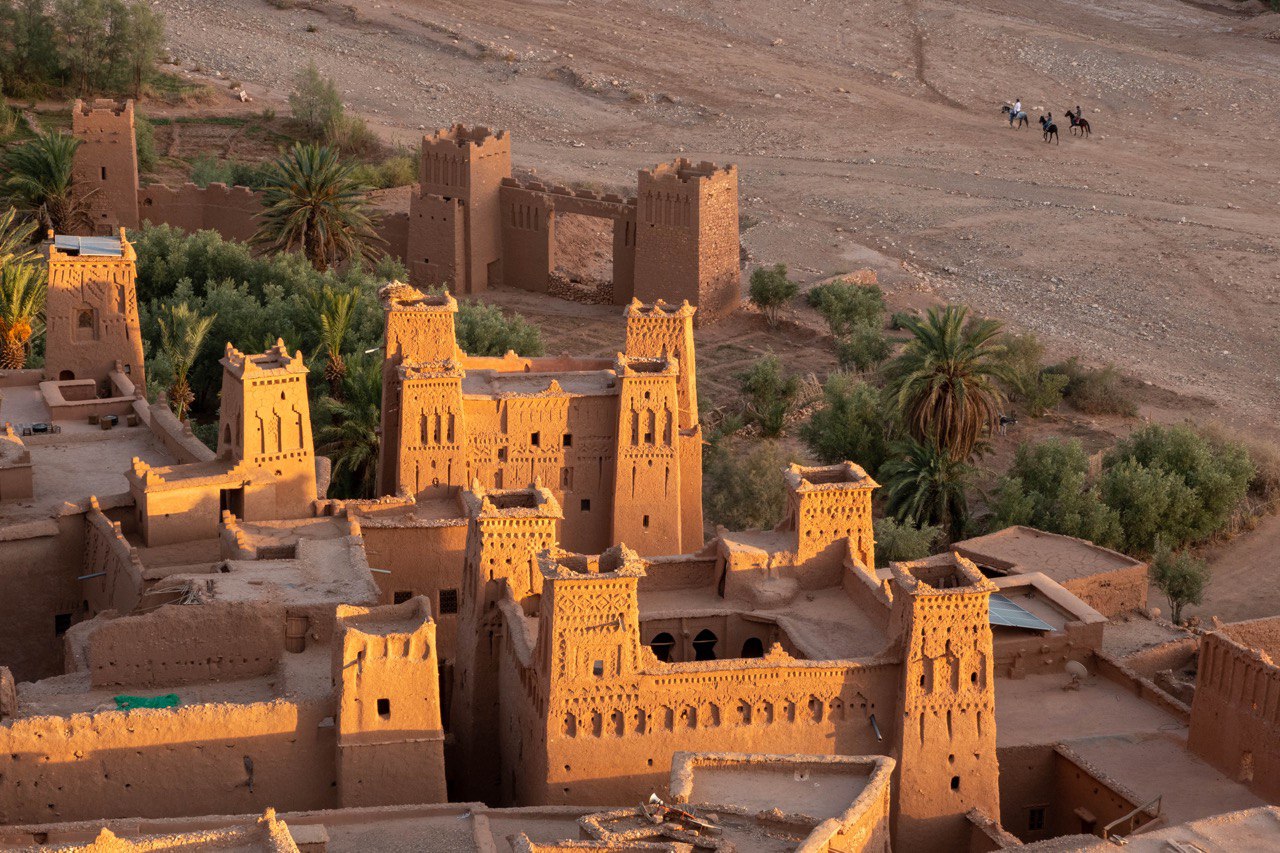
Just beyond it lies Aït Ben Haddou, the fortified earthen village listed by UNESCO and used as a set by dozens of films. Walk up through the ksar to the granary at the top for the view over the valley.
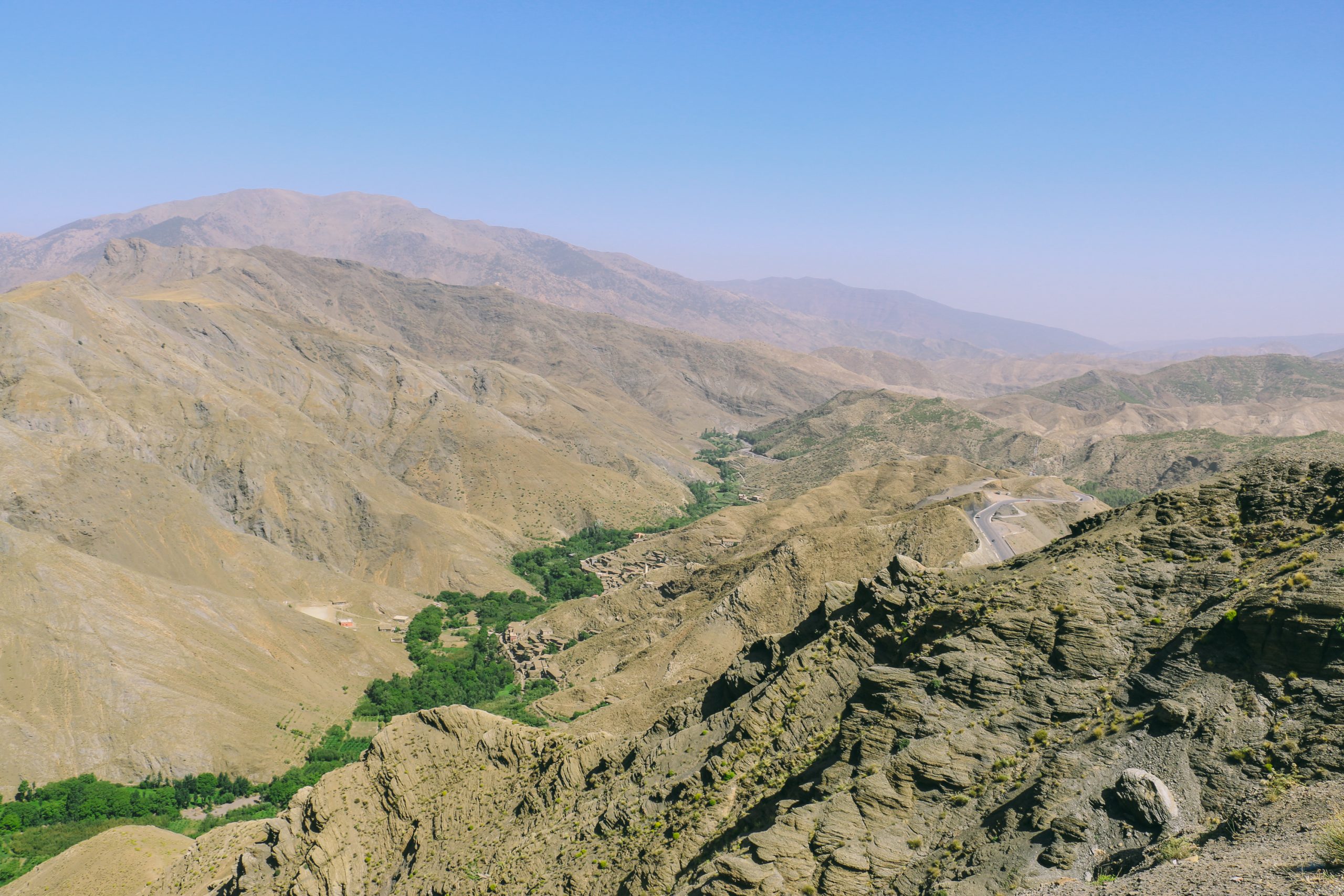
The afternoon drive crosses the High Atlas over the Tizi n’Tichka pass (2,260 m), with hairpin bends, Berber villages and big views on both sides, before dropping down to Marrakech in the early evening.
Day 7: Marrakech
Spend your last full day in the Red City. A good one-day plan:
- Morning: the Bahia Palace (about 100 MAD) and the Ben Youssef Madrasa (about 100 MAD), the most beautiful interiors in the city. Go at opening time to beat the groups.
- Midday: the souks between the madrasa and Jemaa el-Fna: spices, lanterns, leather and carpets. Agree prices before you buy.
- Afternoon: the Jardin Majorelle (book a timed ticket in advance) or the Saadian Tombs.
- Evening: Jemaa el-Fna at dusk, when the food stalls set up, followed by dinner on a rooftop facing the Koutoubia minaret.

If you prefer someone to handle the navigation, our Marrakech city tour with a local guide covers the medina, souks and palaces in a day. Fly out of Marrakech on day 8.

Two alternative one-week routes
The classic route above is the best all-rounder, but it is not right for everyone. These are the two alternatives we suggest most often:
| Classic: Casablanca to Marrakech | Marrakech-based week | North route (no desert) | |
|---|---|---|---|
| Route | Casablanca, Rabat, Fes, Merzouga, Dades, Marrakech | Marrakech (2 nights), 3-day Sahara loop, Essaouira (2 nights) | Tangier or Casablanca, Chefchaouen, Fes, Rabat, Marrakech |
| Sahara night | Yes (Erg Chebbi) | Yes (Erg Chebbi) | No |
| Time in vehicles | Medium–high | High during the desert loop, then relaxed | Low (mostly trains) |
| Flights | Into CMN, out of RAK | Return to RAK | Into TNG or CMN, out of RAK |
| Best for | First-timers who want it all | Cheap return flights to Marrakech, beach finish | Families, slower travellers, train lovers |
Option 2: a Marrakech-based week
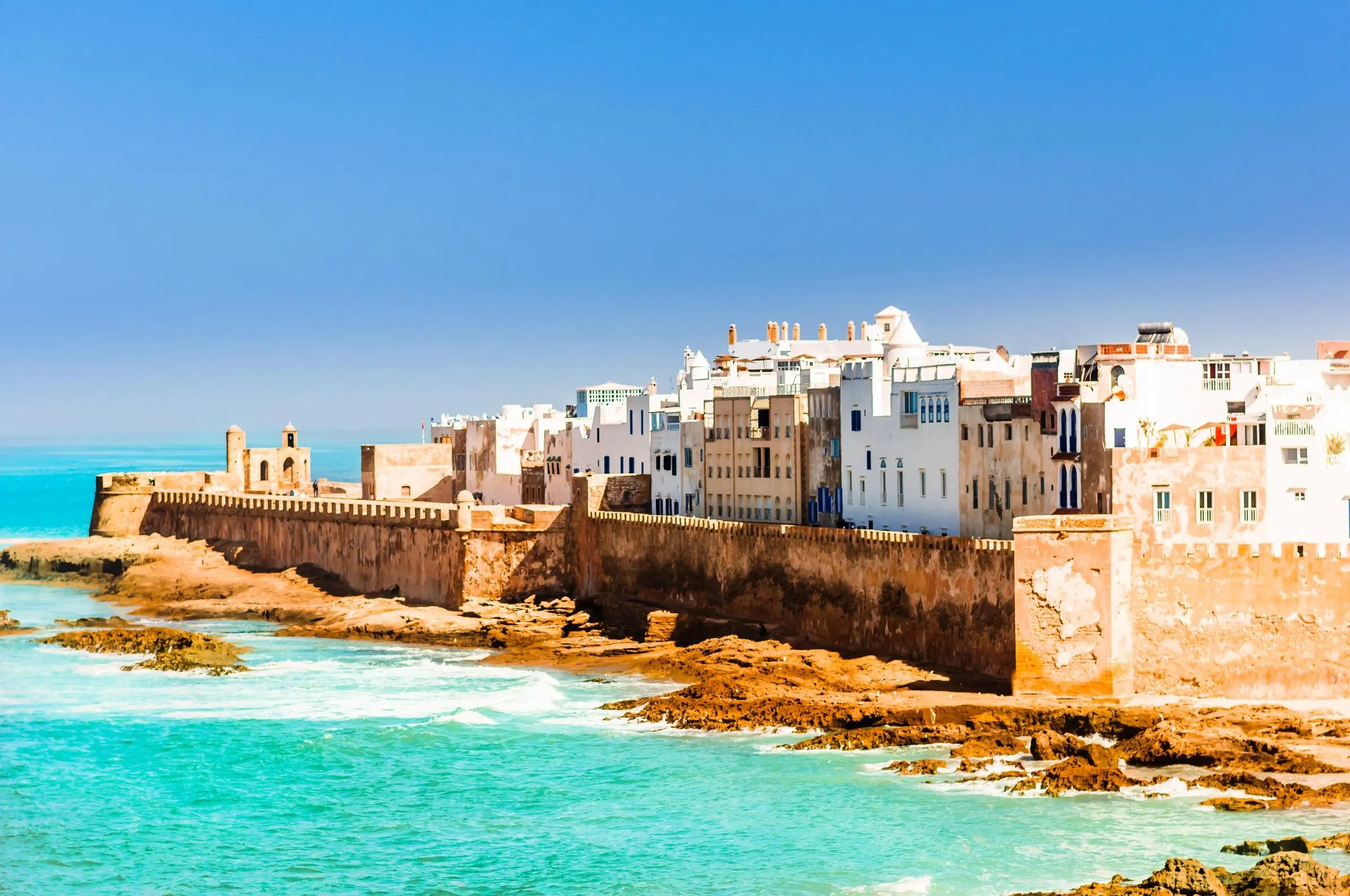
If you have a cheap return flight to Marrakech, base yourself there. Spend days 1–2 in Marrakech, then take a 3-day desert loop over the High Atlas to Merzouga and back through the gorges and Aït Ben Haddou (our 4-day Southern Morocco Discovery does this at a gentler pace). Finish with two nights in Essaouira on the Atlantic coast, about 2.5–3 hours west of Marrakech. You miss Fes, but you gain a relaxed beach-town ending.
Option 3: the north route, by train
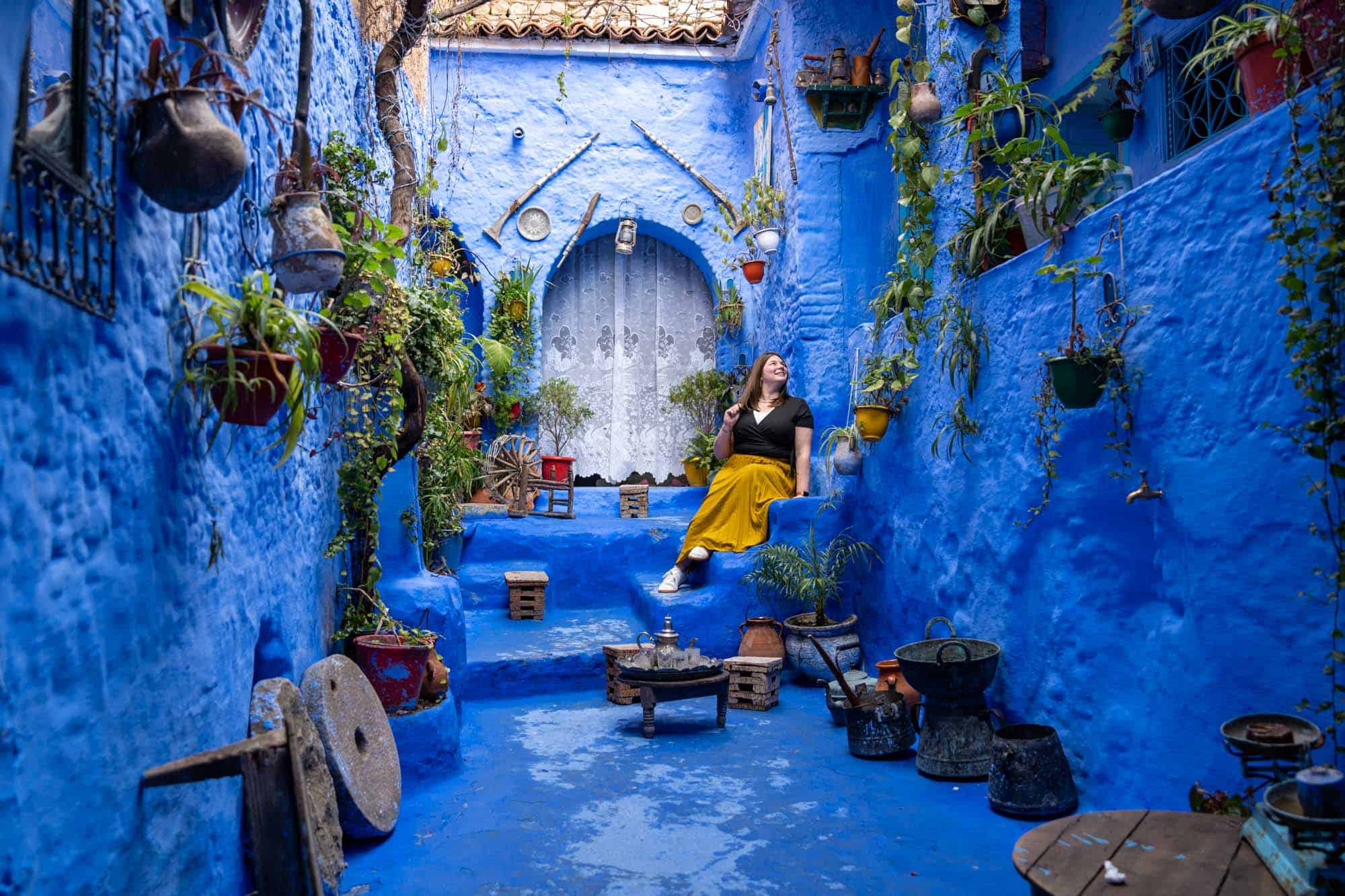
If long drives are a deal-breaker, stay north. The high-speed Al Boraq train links Tangier and Casablanca in about 2 hours 10 minutes, and regular trains run Casablanca–Fes (about 3.5 hours) and Casablanca–Marrakech (about 3 hours). A good week: Tangier, then 2 nights in Chefchaouen, the blue city in the Rif mountains (by road, about 3.5–4 hours from Fes), 2 nights in Fes, a night in Rabat, and 2 in Marrakech. No camel ride, but almost no time in cars.
How to get around Morocco in one week
- Train: fast, cheap and comfortable between Tangier, Rabat, Casablanca, Fes and Marrakech. There are no trains to the desert, the Dades Valley or Chefchaouen.
- Private driver or small-group tour: the only realistic way to do the classic route in seven days. A good driver-guide also handles the camel camp, guides in Fes and the stops you would never find alone.
- Self-drive: possible, but the Fes–Merzouga and Tizi n’Tichka days are long and tiring, and parking near the medinas is difficult. Most first-time visitors are happier with a driver.
- Domestic flights: useful to skip a long drive (for example, Casablanca to Errachidia for the desert), but schedules are limited.
When to go, and what changes by season
Spring (March–May) and autumn (September–November) are ideal for this itinerary: warm days in the cities, comfortable desert nights and clear mountain passes. We go month by month in our best month to visit Morocco guide, but here is what matters for a one-week trip:
- Summer (June–August): Fes and Marrakech can pass 40°C and the desert is hotter still. The route works, but plan sightseeing for early morning and late afternoon.
- Winter (December–February): sunny days, but desert nights can drop near freezing, and snow occasionally closes the Tizi n’Tichka for a few hours. Pack warm layers (see what to pack for Morocco).
- Ramadan (expected around mid-February to mid-March in 2027): a fascinating time to visit. Monuments run shorter hours, some restaurants close during the day, and the evenings come alive after sunset.
How much does a 7-day Morocco trip cost?
Budgets vary enormously with hotel level and whether you travel privately or in a group, but these are the main costs to plan for:
- Riads: from simple guesthouses to luxury riads; the medina riad is part of the experience, so it is worth spending a little more in Fes and Marrakech.
- Entrance fees: modest. The Hassan II Mosque (140 MAD) is the most expensive single ticket on this route; most palaces and madrasas cost around 100 MAD or less.
- Guides: a licensed guide for a full day in Fes or Marrakech is money well spent, and usually saves you time and hassle in the souks.
- Transport: trains are inexpensive. A private driver for the desert section is the biggest single cost, and it is shared when you travel in a small group.
Our small-group departures are designed to make the classic route affordable: you share the vehicle and driver-guide with 2–15 travellers, with a private option on any date.
Practical tips from our guides
- Book open-jaw flights (into Casablanca, out of Marrakech). It is the single biggest time-saver on a one-week trip.
- Carry cash. Small shops, taxis, tips and camps work in dirhams. ATMs are easy to find in cities but scarce in the desert.
- Dress respectfully in medinas and rural areas: shoulders and knees covered is comfortable and appropriate.
- Use licensed guides and ignore unofficial “helpers” in the medinas. See our advice on staying safe in Morocco.
- Eat well: tagine, couscous on Fridays, harira soup, msemen pancakes at breakfast. Our guide to Moroccan food you should try has the full list.
- Don’t over-pack the week. Seven days covers the highlights; if you have 10 days or more, add Chefchaouen, Essaouira or a night in the Atlas Mountains.
Do this route with Travel Link Morocco
Want this week without the logistics? These tours follow the itinerary above or one of its alternatives, with certified English-speaking guides, air-conditioned vehicles and hand-picked riads and camps:
- The Highlights of Morocco Tour: Casablanca, Rabat, Meknes, Volubilis, Fes, the Sahara and Marrakech in one week.
- Sahara Desert Tours Morocco (8 days): Marrakech-based, with two nights around Merzouga.
- Southern Morocco Discovery (4 days): the desert loop from Marrakech, ideal for Option 2.
- Got more time? The 15-day Ultimate Morocco Tour adds the north, Chefchaouen and the coast.
7-day Morocco itinerary: frequently asked questions
Is 7 days enough for Morocco?
Seven days is enough to see the highlights: two or three imperial cities, one night in the Sahara and the kasbahs of the south. You will be moving most days, so if you want a slower pace or to add Chefchaouen and the coast, 10–14 days is better.
Can you see the Sahara in a 7-day Morocco trip?
Yes. On the classic route you reach the Erg Chebbi dunes at Merzouga on day 4, coming from Fes, and continue to Marrakech through the Dades Valley. From Marrakech alone, allow at least 3 days for a round trip to Merzouga.
Should I start in Marrakech or Casablanca?
Start wherever your flights are cheapest; the route works in both directions. Starting in Casablanca and ending in Marrakech saves the best city for last, and Marrakech has more international flight options for the trip home.
Is it better to visit Fes or Marrakech?
Do both if you can; they feel very different. Fes is older, more traditional and more of a maze; Marrakech is livelier, with better gardens, palaces and nightlife. With only one week, the classic route includes both.
Can I do this itinerary by train?
Partly. Trains connect Casablanca, Rabat, Fes and Marrakech well, but there are no trains to the Sahara or the Dades Valley. For the desert section you need a driver or a tour, or you can follow the north route (Option 3), which works almost entirely by train.
Is Chefchaouen worth adding to a one-week trip?
It is beautiful, but it is about 3.5–4 hours from Fes by road, in the opposite direction to the desert. In one week, choose either Chefchaouen (north route) or the Sahara (classic route); with 10 days you can do both.
What is the best month for a week in Morocco?
April, May, October and early November are the most comfortable for this itinerary, with warm cities, mild desert nights and open mountain passes. March and September are also very good.
Is Morocco safe for first-time visitors?
Yes. Morocco is one of the most visited countries in Africa, and the main annoyances are persistent sellers and unofficial guides in the medinas. Travelling with a licensed guide removes most of the hassle.