Solo travel in Morocco is very doable, and thousands of people do it every year. The country is generally safe, cheap to get around and easy to plan, with fast trains between the big cities. The hard parts are the hassle in the medinas, especially for women, and the logistics of reaching the Sahara and the mountains alone. Most solo travellers we meet do the cities on their own and join a small-group tour for the desert and the Atlas. Below is the advice our guides give every solo guest: where to go, how to stay safe, what it costs and when a group makes more sense.
Quick facts: solo travel in Morocco
- Is it safe? Yes, for alert travellers. Violent crime against visitors is rare; touts, scams and street hassle are the real issues.
- Visas: citizens of the US, UK, EU, Canada and Australia get up to 90 days on arrival. Check your own nationality before you fly.
- Best first base: Marrakech, with the most flights and the most help for travellers.
- Easiest way between cities: ONCF trains (Casablanca, Rabat, Fes, Marrakech).
- Hardest part alone: the Sahara, the gorges and the High Atlas. No trains reach them.
- Money: roughly 10–11 dirhams (MAD) to the euro. Carry cash outside the big cities.
- Emergency numbers: police 19, ambulance and fire 15, gendarmerie (rural areas) 177.
- Best months: March–May and late September–November.
Is Morocco good for solo travel?
Yes, with one honest caveat. Morocco gives a solo traveller a lot: it’s a short flight from Europe, the trains are comfortable, riads and hostels are full of other travellers, and Moroccan hospitality is real. Eat alone in a small restaurant and someone will likely ask where you’re from and whether you’ve tried the msemen yet.
The caveat is that you’re more visible on your own. In the souks of Marrakech and Fes you’ll be offered directions, “guides”, shops and hashish, often several times a minute. None of it is dangerous, but it’s tiring, and it’s the main reason some people come home saying Morocco was “a lot”. Know that it’s coming and have a plan for it. The rest of this guide is that plan.
Who enjoys Morocco most alone? People who like cities, food and walking, and who don’t mind saying no politely and often. Who struggles? Travellers who want total peace and quiet in the medinas, or who want to see the desert and the mountains without organising transport, camps and guides themselves.
Is Morocco safe for solo travellers?
Morocco is one of the safer countries in North Africa for visitors, and our own blog post on whether Morocco is safe to travel to covers the general picture. For solo travellers, the risks are mostly small and predictable:
- Fake guides and “wrong way” boys. Young men in the medina will tell you a street is closed, the square is “that way” or the tannery is “only today”. Ignore them and keep walking, and use offline maps. If you really are lost, ask a shopkeeper or a woman, not the person who approached you.
- Taxi overcharging. Petit taxis in the cities should run on the meter. Ask for “le compteur” before you set off, or agree the fare first. A short hop across Marrakech should cost a few tens of dirhams, not 100.
- Shop commissions. A friendly stranger who walks you to a “cooperative” earns a cut of whatever you buy. It isn’t theft, but it inflates prices.
- Pickpockets. Busiest at Jemaa el-Fna after dark and in crowded souk lanes. Use a cross-body bag and keep your phone out of your back pocket.
- Walking late at night. The main squares are lively until late, but the residential alleys of the medina empty out. After dark, ask your riad to send someone to meet you, or take a taxi to the nearest gate.
Local tip: the most useful words you can learn are la, shukran (“no, thank you”). Say it with a smile, don’t stop walking and don’t explain. Engaging, even to say why you don’t want something, keeps the conversation going.
Solo female travel in Morocco
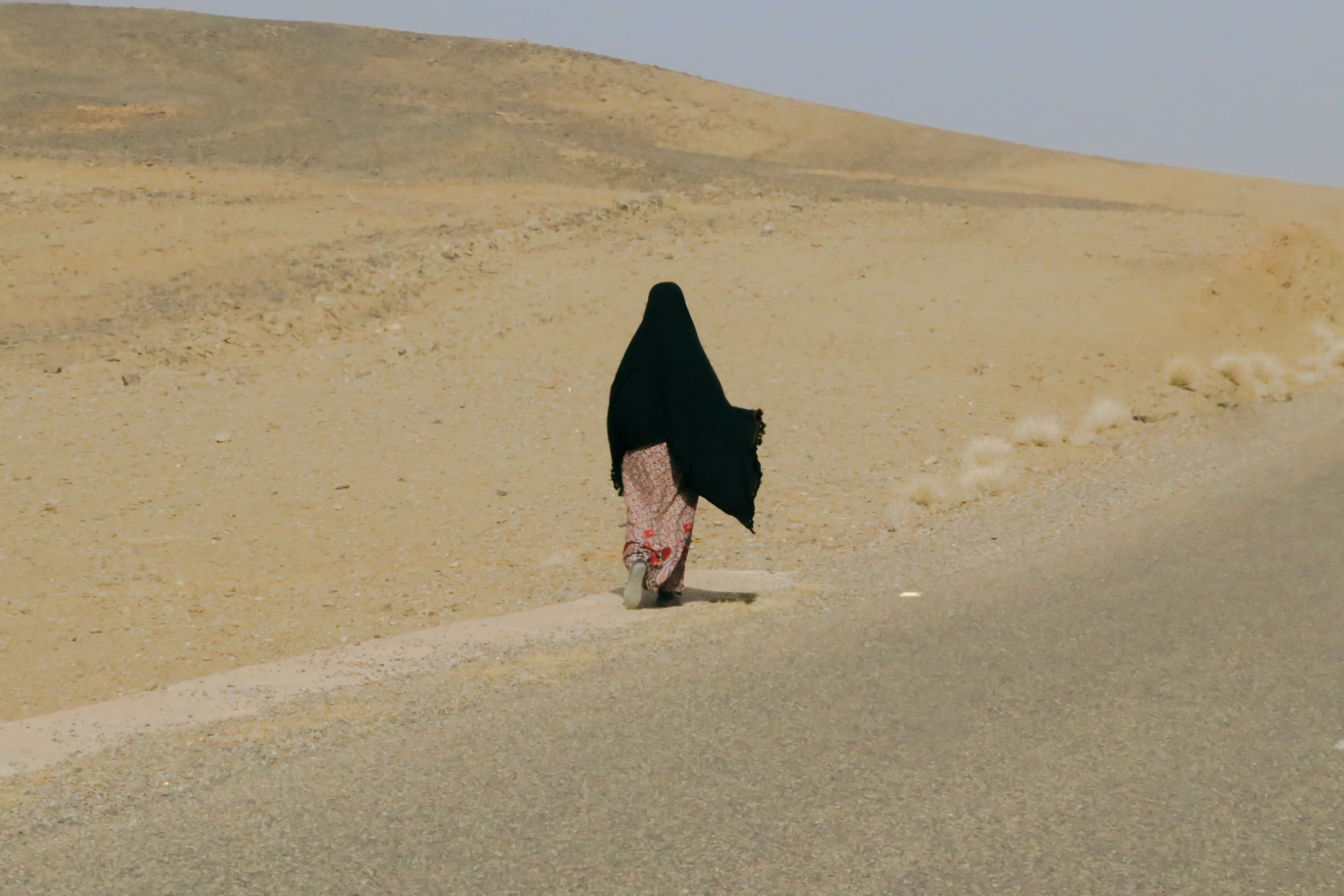
Women do travel alone in Morocco, and most have a good trip, but it’s fair to say the experience is different. Verbal comments and persistent attention in the medinas are common, especially in Marrakech, Fes and Tangier. Physical harassment is far less common, but it happens. Here’s what our female guests and guides recommend:
- Dress for the medina, not the beach. Loose trousers or a long skirt, tops that cover the shoulders, and a light scarf. It won’t stop all comments, but it cuts them noticeably. A headscarf is not expected, except when visiting a mosque. See our Morocco packing list for the full kit.
- Walk with purpose. Hesitating at a junction is what invites “help”. Check your map in a café or shop doorway, then move.
- Don’t respond to comments. Silence and sunglasses work better than an argument. If someone persists, step into a shop or café, or ask a woman or a family nearby for help.
- Choose your riad carefully. Pick one with a 24-hour reception and recent reviews from solo women. Ask for an airport pickup on the first night.
- Use the women around you. Moroccan women will often step in, give directions or share a taxi. In shared grand taxis, ask for the front seat or a seat next to another woman.
- Be careful with “friendly” offers. Invitations to tea at someone’s home, a free ride to the desert or a “brother’s” guesthouse are usually sales pitches.
Plenty of women tell us the hassle disappears almost entirely outside the big medinas. In the Atlas villages, the Dades Valley and the desert, the atmosphere is calm and family-centred. That’s also where a guide and a small group make the biggest difference, because you aren’t negotiating transport alone in remote places.
Where to go in Morocco on your own
Not every destination is equally easy solo. Here’s how the main stops compare for someone travelling alone:
| Destination | Easy alone? | Hassle level | How to get there |
|---|---|---|---|
| Marrakech | Yes | High in the souks | International flights, trains |
| Fes | Yes, with a guide for day 1 | High; the medina is a maze | Flights, trains |
| Chefchaouen | Very | Low | Bus or car (no train) |
| Essaouira | Very | Low | Bus from Marrakech |
| Rabat and Casablanca | Yes | Low | Trains |
| High Atlas villages | With a guide | Very low | Car or tour |
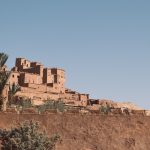
| Aït Ben Haddou, Dades, Todgha | Hard by bus | Low | Car or tour |
| Sahara (Merzouga) | Hard alone | Low | Long bus, or tour |
Marrakech
Most solo trips start here. Spend the first afternoon finding your bearings around Jemaa el-Fna and the Koutoubia, and leave the deep souks for the next morning, when the lanes are quieter. The main sights are easy to visit alone: the Bahia Palace, the Ben Youssef Madrasa, the Saadian Tombs and the El Badi Palace each cost roughly 70–100 MAD, and the Jardin Majorelle costs about 150 MAD for the garden alone, more with the Yves Saint Laurent Museum. Book Majorelle online ahead; the queues are long.
If the souks feel overwhelming, a half-day with a licensed guide on your first day changes everything: you learn the layout, the touts leave you alone, and you get a list of honest shops. Our Marrakech city tour with a local guide does exactly that.

Fes
Fes el-Bali has around 9,000 lanes, and getting lost is part of the experience, but getting lost alone on day one is mostly stressful. Hire an official guide through your riad for the first morning: the Bou Inania and Al-Attarine madrasas, the outside of Al-Qarawiyyin, the coppersmiths of Place Seffarine and the Chouara tannery. On day two you’ll be confident enough to wander. Fes is a 3.5–4 hour train ride from Casablanca and about 7 hours from Marrakech.

Chefchaouen and Essaouira
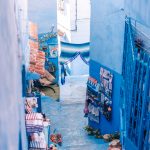
These are the two places solo travellers mention as their favourite breathers. Chefchaouen, the blue town in the Rif mountains, is small, slow and easy to walk, with a busy backpacker scene and hikes to the Spanish Mosque viewpoint. Essaouira, about three hours from Marrakech by bus, has an Atlantic breeze, a walkable medina, a fishing port where you can choose your grilled sardines, and noticeably less pressure from sellers.

The Sahara, the gorges and the High Atlas
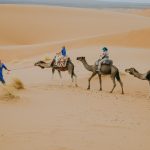
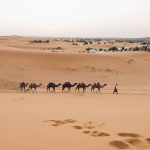
This is where solo travel in Morocco gets complicated. No trains run south of Marrakech, and Merzouga is about 560 km away, 9–10 hours of driving without stops. You can take a long bus, but you’ll miss Aït Ben Haddou, the Dades Valley and the Todgha Gorge in between, then still need to book a camp, camels and transfers on arrival, usually from someone who found you at the bus stop. A private driver solves this but costs the same whether you’re one person or four. For most solo travellers, a shared small-group trip is the sensible answer, which we come back to below.
Getting around Morocco alone
- Trains (ONCF): the best way between Tangier, Rabat, Casablanca, Fes and Marrakech. The high-speed Al Boraq links Tangier and Casablanca. First class gives you a reserved seat and is still good value. Book on the ONCF website or app.
- Buses (CTM and Supratours): reliable, cheap, with assigned seats and luggage tags. Useful for Chefchaouen, Essaouira and the south.
- Petit taxis: small city taxis, each city with its own colour. Insist on the meter. They can’t leave city limits.
- Grand taxis: shared older cars between towns. They leave when full (six passengers), cheap but cramped. You can pay for two seats for more room.
- Ride-hailing apps: Careem and local apps such as Heetch work in some cities. Useful for avoiding price negotiations, but coverage varies.
- Self-drive: possible, but as a solo driver you face the Tichka pass, police checkpoints and parking outside the medinas alone. Few of our solo guests would do it again.
Where to stay as a solo traveller
A riad, a traditional courtyard house turned guesthouse, is the best base for a solo trip. The staff know the neighbourhood, will meet you at the medina gate, book your taxis and tell you what things should cost. Many have a shared breakfast on the roof terrace where you’ll meet other travellers.
Budget travellers will find hostels in Marrakech, Fes, Chefchaouen and Essaouira, many of them in converted riads with rooftop terraces and group dinners. Wherever you stay, read recent reviews from solo travellers, check there’s someone at the door 24 hours and ask for directions with photos before you arrive. Medina addresses are hard to find, even with GPS.
How much does solo travel in Morocco cost?
Morocco is affordable, but solo travellers pay more per person for two things: rooms and private transport. Rough guides for planning:
| Item | Typical cost |
|---|---|
| Bahia Palace, Ben Youssef, Saadian Tombs, El Badi | About 70–100 MAD each |
| Jardin Majorelle (garden only) | About 150 MAD; more with the YSL Museum |
| Hassan II Mosque guided visit, Casablanca | 140 MAD |
| Train, Marrakech to Fes | Roughly €20–50 depending on class, about 7 hours |
| Tagine in a local restaurant | Usually well under 100 MAD |
| Mint tea in a café | A few dirhams in local cafés, more on tourist terraces |
| Private driver to the Sahara | The biggest single cost, paid in full by one person |
That last line is where solo travellers lose the most money. A private 4×4 and driver for a three-day desert loop costs the same for one passenger as for four. Sharing it with a small group is usually the single biggest saving on a solo Morocco trip.
About single supplements: most tour operators charge extra for a private room, because hotel rooms are priced per room, not per person. Ask any operator, including us, how they handle solo travellers before you book: whether a single room is guaranteed, and whether room-sharing with another solo traveller of the same gender is an option.
Why many solo travellers join a small-group tour in Morocco
The pattern we see most often: solo travellers do Marrakech or Fes on their own for a few days, then join a small group for the desert, the gorges and the mountains. It plays to the strengths of both. Here’s what a group solves:
- Transport you can’t easily do alone. The 4×4, the driver-guide, the route over the Atlas and the timing of the camel ride are all handled.
- Cost-sharing. You share the vehicle and guide instead of paying for a private car on your own.
- Built-in company. Long drives, dinners in the Dades Valley and an evening around the campfire in the dunes are better with people to share them with. Many of our guests stay in touch after the trip.
- Less hassle. Walking through a medina or a market with a local guide, the touts simply don’t bother you.
- Safety in remote places. In the desert and the mountains, you’re never negotiating a lift, a room or a camp alone.
- Freedom where it matters. On our trips there’s free time in the towns, so you can still wander alone when you want to.

A sample 8-day solo itinerary: cities alone, desert with a group
This is the shape we suggest most often to people travelling to Morocco alone for the first time. It mixes independent days in the cities with a shared desert trip:
- Day 1, Marrakech: arrive, riad pickup, sunset on Jemaa el-Fna.
- Day 2, Marrakech: morning with a local guide in the souks and palaces; afternoon at the Jardin Majorelle on your own.
- Days 3–5, small-group desert trip: over the Tizi n’Tichka pass to Aït Ben Haddou, the Dades Valley and the Todgha Gorge, a night in the Erg Chebbi dunes at Merzouga, and back to Marrakech. Our 3-day small-group desert tour from Marrakech follows this route.
- Day 6, Essaouira: bus to the coast, fish lunch at the port.
- Day 7, Essaouira: ramparts, beach walk, slow afternoon.
- Day 8, Marrakech: back by bus and fly home.
Got longer? Our 7-day Morocco itinerary and 10-day Morocco itinerary add Fes, Rabat and Chefchaouen, and either can be done as a solo traveller on a group tour.

Best time for a solo trip to Morocco
Our month-by-month guide to the best month to visit Morocco has the detail. For solo travellers:
- Spring (March–May) and autumn (late September–November): the best weather everywhere, and the busiest group departures, so you’ll have more company.
- Winter (December–February): sunny days and fewer tourists, but cold nights in the desert and the mountains. Pack warm layers.
- Summer (June–August): Marrakech, Fes and the desert often reach 40°C. The coast and the mountains are better choices.
- Ramadan: expected around early February to early March in 2027. Daytime is quieter and some cafés close, but evenings are festive and travel runs as normal.
Practical tips for travelling Morocco alone
- Get a local SIM or eSIM at the airport (Maroc Telecom, Orange or inwi). Data makes maps, apps and messages to your riad easy.
- Download offline maps of each medina before you arrive.
- Carry small notes and coins. Taxis, cafés and tips are all cash, and change is often short.
- Share your plans. Send your itinerary and riad details to someone at home, and tell your riad when you expect to be back at night.
- Bargain with a smile. In the souks, ask the price first and counter well below it. It’s a conversation, not a fight.
- Eat where locals eat. Busy food stalls turn over food fast. Our guide to Moroccan food you should try lists the dishes worth ordering.
- Get travel insurance that covers medical care and cancellations.
Join a small-group tour of Morocco
Travelling alone doesn’t have to mean doing everything alone. These small-group tours run on fixed departure dates with an English-speaking guide, and they’re where many of our solo guests meet travel companions:
- 3-Day Desert Tour from Marrakech to Merzouga: the quickest way to reach the Sahara as a solo traveller, shared with a small group. See dates and prices.
- The Highlights of Morocco Tour: Casablanca, Rabat, Fes, the Sahara and Marrakech in one trip.
- Ultimate Morocco Tour: the longer circuit including Chefchaouen and the imperial cities.
- Sahara Desert Tours Morocco: more time in the dunes, the gorges and the kasbahs.
- Atlas Mountains Trek: Berber Villages and Valleys: walking in the High Atlas with a guide, the easiest way to see the mountains alone.
Prefer your own dates? Every tour can also be booked as a private trip.
See all Morocco group tours and dates
Solo travel in Morocco: frequently asked questions
Is Morocco safe for solo travellers?
Yes, for travellers who stay alert. Serious crime against tourists is rare. The common problems are fake guides, overcharging, pickpockets in crowds and persistent street selling. Stay in a well-reviewed riad, use metered taxis, avoid empty medina alleys late at night, and you’ll avoid most of them.
Is Morocco safe for solo female travellers?
Many women travel alone in Morocco and enjoy it, but expect verbal comments and attention in the big medinas. Dress modestly, walk with purpose, don’t engage with comments and choose riads with good reviews from women. The hassle drops sharply in the mountains, the desert and smaller towns like Chefchaouen and Essaouira.
Can I visit the Sahara alone?
You can, but it’s awkward. Merzouga is about 560 km from Marrakech, there are no trains, and you’d need to arrange buses, a camp and camels yourself. A shared small-group desert tour is usually cheaper than a private driver and much easier than doing it by bus.
Is Morocco expensive for solo travellers?
Day-to-day costs are low: entrance fees are typically 70–150 MAD, and a local meal is well under 100 MAD. Solo travellers pay more for private rooms and private transport, so sharing transport on a group tour is the biggest way to save.
What is the best city in Morocco for solo travel?
Marrakech is the easiest start because of its flights, riads and services. Essaouira and Chefchaouen are the most relaxed. Fes is rewarding but best started with a guide on your first day.
How many days do I need in Morocco as a solo traveller?
Seven to ten days lets you see Marrakech, the Sahara and either Fes or the coast without rushing. With five days, focus on Marrakech and a desert trip.
Are group tours good for solo travellers in Morocco?
Yes, especially for the desert and the mountains. You share costs, meet other travellers, have a guide who handles the logistics and keep free time in the towns. Many solo travellers combine independent city days with a small-group tour.